
How to Create Contact Record from a Business Card: A Complete Guide
Business cards may look simple, but they still play an important role in professional networking. Even in a digital-first world, people continue to exchange physical business cards at conferences, meetings, exhibitions, and networking events. The real challenge begins after you receive them: how do you efficiently convert business card to contacts in a structured system?
Today, many professionals use tools to scan business card to contacts, making it easier to store and manage information without manual typing. This process is often handled through a business card to contact app or a business card scanner app, which helps instantly digitize information and reduce human error.
Here is a revised version with the keywords incorporated naturally:
Creating a contact record is not just about saving a phone number—it is about using a business card to create a valuable digital contact. With modern tools, you can easily Create Contact from Business Card by scanning and digitizing the information, then automatically organizing it in your CRM or phone contacts. Whether you use a smart business card or scan a traditional paper card, digitizing contact information makes networking faster, more accurate, and more efficient. Choosing the best digital business card solution also helps keep your contacts updated, easily shareable, and accessible across all your devices.
Why Converting Business Cards Matters
When business cards are left unprocessed—stacked on desks or stored in drawers—they lose value. Contacts get forgotten, and opportunities are missed. By using a business card reader app or automation tools, you can scan card and save contacts directly into your system.
This ensures:
- Every lead is captured and stored securely
- Information is easy to search and update
- Follow-ups happen on time
- Teams share a unified database
Modern businesses rely heavily on structured systems like Salesforce and HubSpot CRM where users can even perform business card to CRM conversion directly using integrated scanning features.
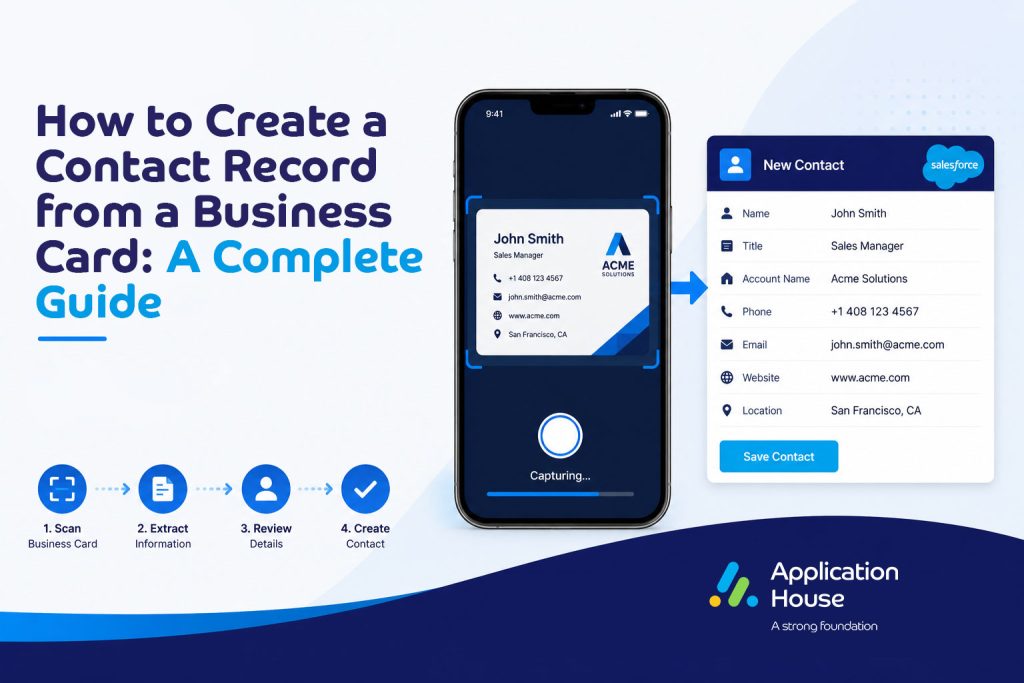
Step 1: Collect and Organize Business Cards
Start by safely collecting business cards after meetings or events. Avoid damaging them, as even small marks can affect scanning accuracy when using a business card scanner app
Sort cards by priority and Create Lead from Business Card instantly. This helps decide which ones should be processed first when you save business card to phone contacts or CRM.
Step 2: Extract Key Information
A business card typically includes:
- Full name
- Job title
- Company name
- Phone number
- Email address
- Website
- Address
Accuracy is essential, especially when you scan business card to contacts using OCR-based tools. Even small mistakes can lead to failed communication.
Step 3: Choose Your Contact Management System
Before you begin, decide where you want to store the contact:
- CRM platform
- Phone contacts
- Spreadsheet
For business use, CRMs like Zoho CRM or Microsoft Dynamics 365 are ideal for business card to CRM workflows.
Step 4: Create or Convert Contact Record
This is where transformation happens. Whether you manually enter data or use a business card to contact app, you convert physical information into structured digital records.
A contact record includes:
- Name
- Company
- Job title
- Phone and email
- Notes and tags
Using tools to convert business card to contacts ensures faster data entry and reduces manual effort.
Step 5: Use Business Card Scanner Apps
Instead of typing everything manually, you can use a business card scanner app or business card reader app. These apps use OCR (Optical Character Recognition) to:
- Scan business cards
- Extract text automatically
- Save data into phone contacts or CRM
Apps like CamCard help you quickly scan card and save contacts with minimal effort.
However, always verify scanned data to ensure accuracy.
Step 6: Clean and Verify Data
After you digitize business cards, review the information carefully:
• Correct phone formats
• Proper email structure
• No spelling mistakes
• No duplicate contacts
Clean data ensures your CRM remains reliable and effective.
Step 7: Add Contextual Notes
Adding context improves future communication. Include:
- Where you met the person
- Purpose of interaction
- Follow-up plans
This is especially useful when managing business card to CRM workflows in platforms like Salesforce.
Step 8: Tag and Segment Contacts
Tagging helps organize contacts for better outreach:
- “Conference Lead”
- “Investor”
- “Potential Client”
This makes it easier to manage large datasets created when you convert business card to contacts at scale.
Step 9: Schedule Follow-Ups
After you save business card to phone contacts or CRM, set reminders:
- Send follow-up email
- Connect on LinkedIn
- Schedule meetings
Automation ensures no lead is missed.
Step 10: Maintain and Update Contacts
Even after you scan business card to contacts, data can become outdated. Regular updates keep your system accurate and useful.
Review your database monthly or quarterly, especially for active leads.
Final Thoughts
Learning how to properly digitize business cards is essential for modern networking. Whether you use a business card reader app, a business card scanner app, or a full CRM integration, the goal remains the same: turn paper contacts into actionable digital relationships.
Companies like Application House highlight the importance of structured digital workflows, where even simple tasks like business card to CRM conversion become part of a larger automation strategy.
In the end, every time you scan business card to contacts, you are not just saving information—you are building stronger, faster, and more reliable business relationships.